The best end of summer activities for families are often the ones that fit into the day you already have. A picnic can happen on the living-room floor. A goodbye-to-summer walk can take ten minutes. You do not need to squeeze an entire season of memories into one weekend.
If school has already started, use these ideas on an afternoon or weekend that suits you. They also work as last week of summer activities or for a future Labor Day break; none depends on a particular date. Choose one idea that sounds pleasant, check the weather if you are heading outside, and leave the rest for another time.
This end of summer bucket list is a menu, not homework. Most ideas use things you may already have, and the indoor options work when the weather or everyone’s energy says to stay home.
| If you have… | Try… | Keep it simple |
|---|---|---|
| Ten minutes | A short walk or a favorite song | Stay close to home |
| A spare afternoon | A picnic or familiar park visit | Pack your usual snacks |
| A rainy day | A memory page or reading fort | Use supplies on hand |
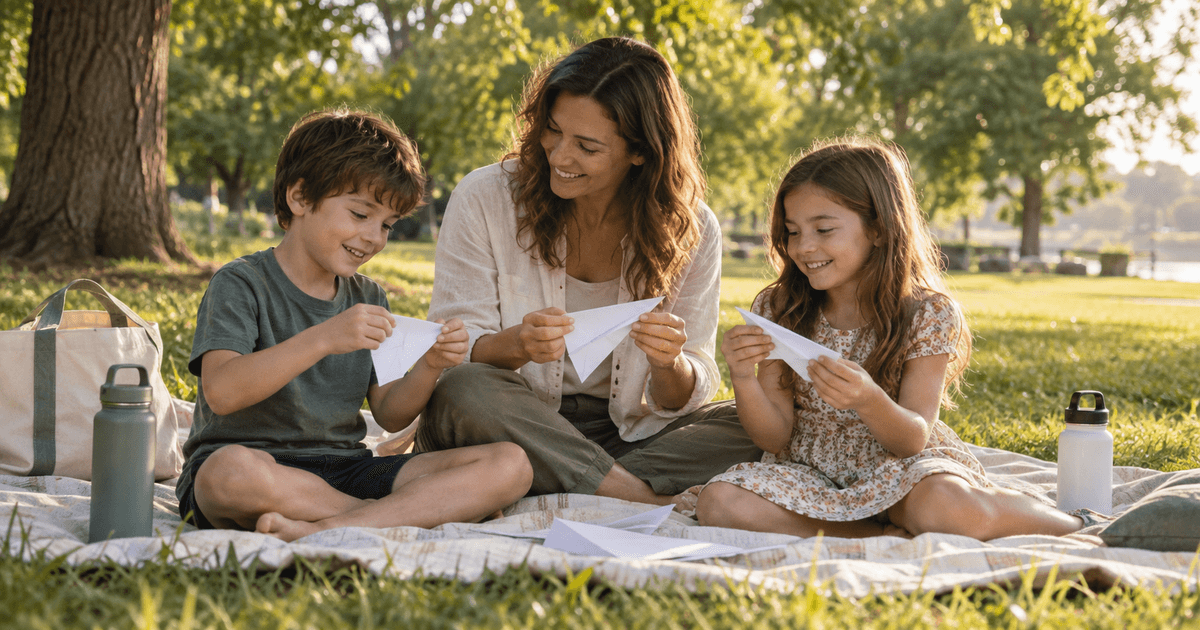
1. Fold paper airplanes for a park picnic
Pack scrap paper beside the sandwiches and make a few planes on a blanket. Choose an open patch away from people, then try a gentle distance challenge or aim for a jacket on the grass. Each person can change one fold and try again. Finish whenever lunch is ready; a five-minute experiment still counts as an afternoon worth remembering.
2. Draw a chalk send-off
Give everyone a small patch of a private patio or another permitted surface. Draw a favorite summer moment: a giant ice cream, a swimming pool, a garden flower. Nobody needs to make recognizable art. Join the pictures with a winding chalk path and walk along it together, letting each artist explain their part. Take one photo before you put the chalk away.
3. Take the shortest possible sunset walk
Choose a familiar route close to home and head out while there is still enough light to see clearly. Your mission is to notice three things: a color in the sky, a sound, and something that has changed since early summer. A loop around the block is enough. If evenings are busy, try a morning walk with exactly the same tiny mission.
4. Let the children plan a picnic
Offer a manageable choice: garden, local park, or living-room floor. Then let children pick two things from food you already have and choose the blanket. Adults handle any necessary food storage and preparation. Bring water and a bag for rubbish. The novelty comes from moving the meal, so there is no need to turn lunch into a themed event with special supplies.
5. Make a one-page summer memory book
Use a sheet of paper or an empty notebook page. Add one photo, a drawing, and a sentence dictated by each person: “The bit I want to remember is…” Children who prefer making things can arrange paper shapes instead. Save room for ordinary moments, like learning a card game or eating breakfast outside. Those count alongside trips and big days out.
6. Choose one backyard game everyone can join
For a mixed-age group, make participation the first goal. Start with gentle catch, let players take turns, and match the challenge to their coordination. For older children ready for a faster game, the Spikeball 3-Ball Original Roundnet Game Set is one option for a shared backyard activity. Clear space around the play area before starting.
An option for families who want a shared backyard game and have players ready for the coordination involved.
Check price on Amazon →In Spikeball’s standard rules, two teams of two have up to three touches to return the ball onto the net. Catch-and-toss turns or an extra bounce can be your own beginner house rules. Younger children can play gentle catch alongside an adult instead. You can also use a ball you already own for a completely different game.
7. Revisit the easiest favorite place
Ask everyone to name somewhere local they would happily go again. Pick the option with the least complicated journey: a familiar playground, a shady path, or the bench where you ate snacks in June. Repeating a good afternoon is allowed. Agree on a short visit and an easy leaving time so the outing fits around work, meals, and school-day energy.
8. Create a family summer playlist
Each person chooses two songs that remind them of the season. Play the results while making dinner or tidying the picnic bag, and let people explain their choices if they want to. Include silly songs and someone’s unexpected favorite. You can keep the playlist for next year, or simply have a ten-minute living-room dance break and call the job done.
9. Build a rainy-day reading fort
Drape a light blanket over sturdy furniture without blocking a walkway, then bring in cushions and a few library books. Let one person choose a funny story and another choose a picture book. Read aloud, look through illustrations, or listen quietly together. Leave food and drinks outside the fort if that makes cleanup easier. Dismantling it can be the final team challenge.
10. Try a neighborhood color hunt
Choose five colors before you leave and look for each one along a familiar route. A yellow door, purple flower, or red bicycle can count. Point things out without entering gardens or collecting plants. Younger children can search for one color at a time; older ones can look for an unusual shade. Stay together and give the hunt a clear finishing point.
11. Hold a make-your-own snack afternoon
Put out a few familiar ingredients and let everyone assemble a snack: fruit and yogurt, toast with toppings, or a bowl of popcorn with a favorite seasoning. Check ingredients against your family’s usual dietary needs, and have an adult handle cutting or hot equipment. Serve the snacks somewhere slightly different, even if that means the kitchen floor on a washable picnic blanket.
12. Visit the library with a tiny mission
Instead of searching for the perfect stack, ask each person to find one thing: a book with an animal on the cover, a comic, or a story set somewhere unfamiliar. Check the library’s opening hours before setting out. If borrowing books is already part of your week, make the change small: swap recommendations or choose a read-aloud book for the first autumn evening.
13. Run a very unofficial summer awards ceremony
Write playful awards that celebrate things people actually enjoyed: best puddle finder, most enthusiastic sandwich maker, or funniest invented dance. Let children make awards for adults too. Keep them kind and avoid ranking siblings against each other. Hand out paper certificates or announce the winners over dinner. Anyone who dislikes attention can help present rather than receive an award.
14. Photograph five ordinary details
Offer an adult-supervised camera or phone and choose five small things to remember: sandals by the door, the garden chair, a favorite toy, or chalk dust on someone’s fingers. Ask before photographing people, and keep the collection private unless everyone involved agrees otherwise. Look through the pictures together and choose one to print or save. You do not need a polished family portrait.
15. Play a familiar card or board game
Bring out a game people already know rather than making the evening depend on learning complicated rules. Set aside twenty minutes, agree whether you will keep score, and let anyone take a break. For younger children, an adult can partner up or manage the cards. Stop after one round if that is what the family has energy for; a rematch can wait.
16. Make a kindness note for someone nearby
Draw or write a short thank-you for a person who made summer nicer: a relative, a neighbor, or the friend who shared their garden. Be specific about the moment you appreciated. Children can dictate while an adult writes, and delivery can wait until it is convenient. Keep it a friendly optional gesture, without turning the afternoon into a list of obligations.
17. Tell stories outside after dinner
Take a few chairs into a garden or sit near an open window if going outside is impractical. One person begins, “On the last day of summer, we found…” and everyone adds a sentence. The story can become as silly as it likes. A child who would rather listen can choose the main character or make sound effects instead of speaking on cue.
18. Let everyone choose a ten-minute favorite
Give each person a small turn to pick something simple: bubbles in the garden, drawing, dancing, or looking through photos. Keep the choices within your available space and supplies. Explain the time limit before you begin, and use a timer if it helps transitions. You are making room for different preferences, so there is no requirement that everyone love every choice.
19. Pack a small box for next summer
Choose a few useful seasonal things worth keeping together, such as chalk, a picnic cloth, or outdoor game instructions. Clean and dry items before storing them. Add a note naming one activity you would like to repeat. Children can decorate the label or choose a drawing to include. Skip a keepsake box entirely if extra storage would make life more complicated.
20. Choose one thing to carry into autumn
Finish by asking, “What did we enjoy enough to keep doing?” It might be a weekend picnic, an after-dinner walk, or a regular library visit. Choose one idea and find a realistic place for it in the coming week. That is a gentler summer send-off than promising a whole new routine. The good part of the season does not have to end with it.
For an easy starting point, let each person nominate one idea and choose the one that needs the least preparation today. You can save the others for later. A small shared moment is a perfectly good way to mark the season.