Affiliate disclosure: This article contains Amazon links. As an Amazon Associate we earn from qualifying purchases, at no extra cost to you.
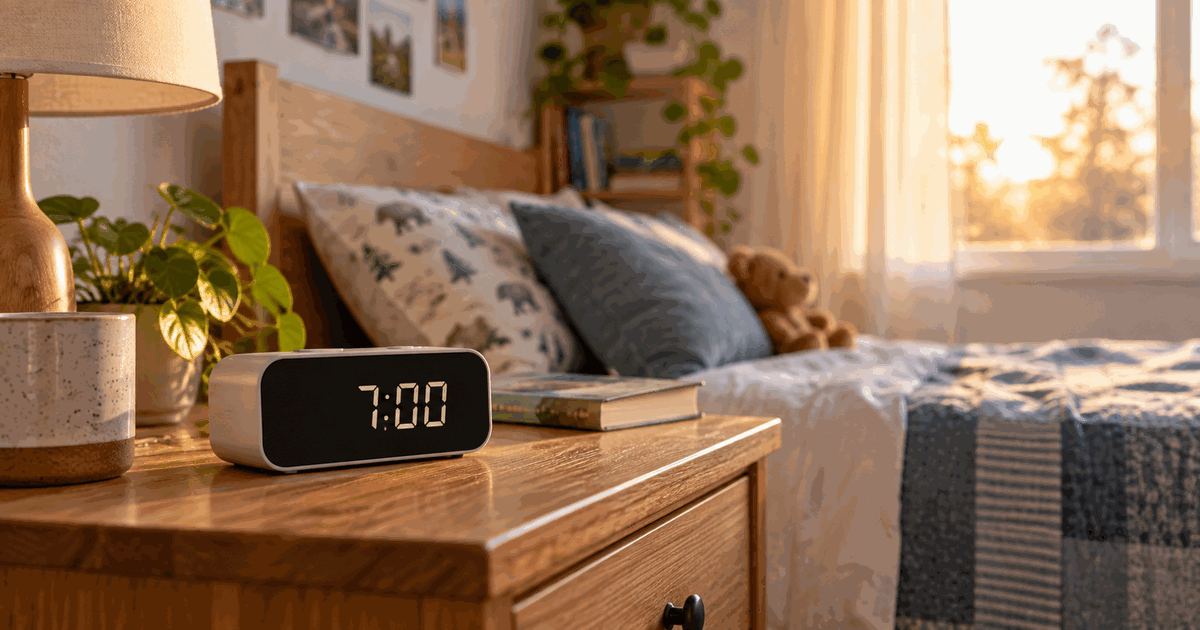
A phone can wake a child in the morning, but it also puts messages, games, videos and notifications beside the bed. A separate alarm clock has one clear job. It can make a phone-outside-the-bedroom rule easier because the child no longer needs the phone as an alarm.
The best alarm clock for a child or teen is not automatically the brightest, loudest or most complicated model. It is the clock they can set, read and silence without help, while keeping the bedroom dark and calm enough for sleep.
This guide compares useful clock types and gives you a short home test. It does not rank products we have not independently tested.
Quick comparison: which alarm clock type fits?
| Clock type | Useful for | Check before buying |
|---|---|---|
| Basic digital clock | Simple weekday waking | Display dimming, button labels and backup behavior |
| Clock with night light | Children who want a low bedside light | Whether the light can be fully switched off |
| Wake-light clock | A gradual light cue before sound | Darkest setting, timing controls and room placement |
| Dual-alarm clock | Teens with different school and weekend times | How clearly the active alarm is shown |
| High-volume or vibrating clock | People with a documented need for a stronger cue | Hearing comfort, household disruption and professional advice when relevant |
| Routine clock for younger children | Visual cues for sleep and wake periods | Whether the display is understandable without becoming a toy |
Start with the real problem
Write down why you are shopping before comparing features. A seven-year-old who wakes too early needs a different setup from a teenager who sleeps through a quiet alarm. A child who cannot read a small display needs different controls from a teen who wants separate weekday and weekend times.
- Phone stays in the bedroom: choose a clock simple enough to replace the alarm function immediately.
- Display keeps the child awake: prioritize a fully dimmable or switchable display.
- Alarm is confusing: prioritize clear controls and a visible alarm-on indicator.
- Power cuts reset the clock: check exactly what the backup preserves.
- Child sleeps through alarms: review sleep opportunity and health factors before only increasing volume.
Getting the phone out of the bedroom
The American Academy of Pediatrics recommends keeping screens out of children's bedrooms at night and turning screens off before bedtime. Its guidance for teens also suggests charging devices outside the bedroom and using a separate alarm clock when possible. A dedicated clock removes the most common practical objection: “I need my phone to wake up.”
The Mesqool Digital Alarm Clock with 7-Color Night Light and Dimmer is one dedicated-clock option assigned to this guide. We have not independently tested it. Check the current listing, manual, dimensions, controls, warnings and return terms before deciding whether it fits your child and room.
A dedicated bedside clock to compare when the goal is moving the phone out of the bedroom. Confirm the current controls and specifications on the listing.
Paid link: We may earn a commission if you buy through this link.
Check price on Amazon →Put the phone at a shared charging point or another agreed location. Keep emergency-contact needs in mind and choose a plan that fits the child's age and household. The clock supports the rule; a calm family agreement makes the rule workable.
Seven checks that matter more than extra features
1. The display gets genuinely dim
Test the darkest setting in a dark room. A display that looks mild in daylight may feel bright at midnight. Check whether the numbers, alarm indicator and night-light feature can be dimmed separately. If the light cannot be switched off, decide whether that fits the sleeper before buying.
2. The child can set it without an adult
Look for readable labels and a short setting sequence. A clock that requires holding three similar buttons in a precise order may become an adult's daily task. Download the manual first when available and ask the child to explain the steps back to you.
3. The alarm state is obvious
The screen should clearly show whether an alarm is active and which time is set. Dual alarms can help with different schedules, but only when it is easy to see which one will ring. Confusing indicators create late-night checking and accidental weekend alarms.
4. The sound fits the room
More volume is not always better. Start at the lowest effective level and place the clock far enough away that the child must sit up or stand, without positioning it where they could trip over a cable. A harsh alarm that wakes the entire house may solve one problem by creating another.
5. Backup behavior is clearly described
“Battery backup” can mean different things. It may preserve the saved time during an outage without lighting the display, or it may power the alarm. Read the exact manual and listing. Never assume a battery makes every function work normally.
6. Controls do not invite bedtime play
Color choices and sounds can be useful, especially when a child helps select a comfortable setup. They can also become a distraction. Choose a model whose optional effects can be locked, dimmed or left alone after setup.
7. The return window allows a real bedroom test
Check the seller's current return terms. Test the clock for several nights while keeping the packaging and manual. A display, sound or control scheme that feels fine in a store may not work at 6:30 a.m.
Choose by age and independence, not marketing labels
Younger school-age children
Use a simple display, a clear alarm indicator and very few controls. Practice the difference between turning the alarm off for today and disabling it completely. If a visual sleep-wake cue is used, explain that it is a routine signal rather than permission to leave the room in every circumstance.
Tweens
Let them participate in choosing the sound and brightness, then give them responsibility for setting it. Put a short evening checklist beside the clock during the first week: confirm alarm, place tomorrow's clothes, charge phone outside the room, and turn the display to its sleep setting.
Teens
Keep the conversation focused on sleep and morning independence instead of punishment. Agree on the charging location, emergency contact plan and exceptions before moving the phone. A dual alarm may help with varying schedules, but large weekend shifts can still make school mornings harder.
A seven-day alarm-clock setup plan
| Day | Action | What to note |
|---|---|---|
| 1 | Set the clock together and place it safely | Can the child read the display from bed? |
| 2 | Use the darkest comfortable display setting | Was any light distracting? |
| 3 | Let the child set and confirm the alarm | Which control caused confusion? |
| 4 | Move the phone to the agreed charging place | Was an emergency-contact concern unresolved? |
| 5 | Adjust placement or volume once | Did the alarm wake other people? |
| 6 | Test the weekend or second-alarm plan | Is the active alarm easy to identify? |
| 7 | Review the week together | Keep, change one setting, or return? |
Change one setting at a time. If several variables change together, it is hard to know whether brightness, volume, placement or bedtime caused the result.
A ten-minute check before you keep the clock
Do this check with the child who will use the clock. Start with the room lights on, then repeat the display and button checks in the darker conditions they will see at bedtime. The goal is not to explore every setting. It is to confirm that the few actions used every day are obvious and repeatable.
- Set the current time: ask the child to find the correct buttons and complete the task with the printed instructions nearby.
- Set an alarm five minutes ahead: confirm that the screen shows an unmistakable alarm-on symbol.
- Dim the display: move through every brightness level and check the darkest one from the bed.
- Let the alarm sound: begin at a modest volume, then confirm the child can stop it without unplugging the clock.
- Set tomorrow's real alarm: have the child repeat the process without prompting. Check it once together.
If the sequence is still confusing after a few calm attempts, that is useful information. A feature-rich model is a poor fit when the morning routine depends on an adult checking it every night. Keep the packaging until the household has tested the normal bedtime and wake-up routine.
Place it for waking, safety and less snoozing
Start with the clock on a stable surface where the display is readable without lighting the room. Keep it away from the edge, drinks and loose bedding. Route the power cord according to the manufacturer's instructions and keep cords out of walkways and away from younger children.
For a child who switches the alarm off while half asleep, try moving it a few steps from the bed rather than immediately raising the volume. The trip across the room should be clear and safe in low light. Avoid hiding the clock so far away that setting it becomes inconvenient or the alarm disturbs the rest of the household.
After three mornings, ask one practical question: what failed first? If the child could not see the controls, adjust placement. If the display disturbed sleep, reduce brightness or turn it away. If the alarm was missed despite enough sleep opportunity, review sound, routine and any health concerns. One specific observation leads to a better adjustment than changing every setting at once.
For heavy sleepers, check sleep before chasing volume
The CDC lists 9 to 12 hours of sleep per 24 hours for children ages 6 to 12 and 8 to 10 hours for teens ages 13 to 18. Work backward from the required wake time and protect enough sleep opportunity. A louder device cannot replace adequate sleep.
Ask a healthcare professional about loud habitual snoring, breathing pauses, persistent difficulty falling asleep, unusual nighttime movements, severe daytime sleepiness or repeated inability to wake despite enough sleep opportunity. These concerns deserve assessment rather than a stronger alarm alone.
What we would skip
- A clock with a display that cannot be dimmed enough for the room.
- A complicated model the intended user cannot set independently.
- Unverified claims that a light or sound will fix a sleep problem.
- A cable arrangement that crosses a walkway or hangs within reach of a younger child.
- A connected device that recreates the notifications and entertainment the family is trying to remove.
The practical choice
Choose the simplest clock that passes the bedroom test: readable when needed, dark when sleeping, clear to set, reliable for the schedule and easy for the child to operate. If it also lets the family charge phones outside the bedroom, it has done more than wake someone up. It has removed one source of nighttime friction.